

Our History
The Ad Council’s mission is to convene the best storytellers to educate, unite and uplift. By opening hearts and inspiring action, together we accelerate change.
As we look ahead to our future, we also continue to examine the lessons of our legacy, which stretches back through decades of American history to our WWII-era founding. Our goal is to assess this legacy honestly, as we work every day to create a culture where everyone can thrive.
Read on to learn more about notable moments in the history of the Ad Council.
As we look ahead to our future, we also continue to examine the lessons of our legacy, which stretches back through decades of American history to our WWII-era founding. Our goal is to assess this legacy honestly, as we work every day to create a culture where everyone can thrive.
Read on to learn more about notable moments in the history of the Ad Council.
1940s
1941
James Webb Young, cofounder of the Young and Rubicam agency, first articulates an idea to industry giants including Raymond Rubicam, J. Walter Thompson and Leo Burnett. His idea? An organization that could bring the entire advertising industry together in service of social good. Three weeks later, Pearl Harbor is attacked.

1942
The organization incorporates as the Ad Council on June 25, but is quickly renamed the War Advertising Council with the intention of mobilizing the advertising industry around WWII efforts, producing propaganda including “Women in War Jobs,” “Buy War Bonds,” and “Loose Lips Sink Ships.”
The Ad Council now recognizes that, while emphasizing the importance of a unified American populace at home, some WWII messages from the War Advertising Council also stoked paranoia of non-white Americans and foreigners, including particularly disparaging depictions of Japanese people.
The Ad Council now recognizes that, while emphasizing the importance of a unified American populace at home, some WWII messages from the War Advertising Council also stoked paranoia of non-white Americans and foreigners, including particularly disparaging depictions of Japanese people.
1944

The story of Smokey Bear — who still educates Americans about fire safety today — begins during WWII, when fears of incendiary shells igniting wildfires in the forests of the Pacific Coast led to the creation of the Cooperative Forest Fire Prevention program.
In need of a mascot, the U.S. Forest Service turned to advertising agency Foote, Cone & Belding (FCB), which created Smokey Bear, whose “Only You” message began on a series of posters and stamps in the 1940s. Not long after, Smokey began appearing in radio and TV public service announcements (PSAs), often accompanied by celebrities like Dolly Parton, Ray Charles, Betty White, and many more. Today, the agency relationship continues through BBDO, who will develop PSAs on a pro-bono basis.
As the ever-evolving face of the longest-running campaign in American history, Smokey remains an enduring icon. Today you can find him in PSAs, online, and on social media continuing to spread the message of wildfire prevention.
In need of a mascot, the U.S. Forest Service turned to advertising agency Foote, Cone & Belding (FCB), which created Smokey Bear, whose “Only You” message began on a series of posters and stamps in the 1940s. Not long after, Smokey began appearing in radio and TV public service announcements (PSAs), often accompanied by celebrities like Dolly Parton, Ray Charles, Betty White, and many more. Today, the agency relationship continues through BBDO, who will develop PSAs on a pro-bono basis.
As the ever-evolving face of the longest-running campaign in American history, Smokey remains an enduring icon. Today you can find him in PSAs, online, and on social media continuing to spread the message of wildfire prevention.
1945
Starting in 1945, the Ad Council works with the American Red Cross on public service advertising campaigns for more than 50 years. The PSAs raise public awareness of the various services provided by the Red Cross: helping recruit blood donors, enlisting volunteers and raising funds.
In the first month, the ads helped to recruit 30,000 volunteers. Two years in, the recruitment campaign increased young adult involvement in the Red Cross by 37%. In 1972, a special emergency campaign helped raise more than $15 million for the victims of Hurricane Agnes.
Through the years, campaigns also informed the public about steps that they could take to prevent and cope with health problems.
In the first month, the ads helped to recruit 30,000 volunteers. Two years in, the recruitment campaign increased young adult involvement in the Red Cross by 37%. In 1972, a special emergency campaign helped raise more than $15 million for the victims of Hurricane Agnes.
Through the years, campaigns also informed the public about steps that they could take to prevent and cope with health problems.

1946
Following President Truman’s request for the organization to continue its work as a peacetime public service organization addressing the most pressing and topical social issues, the War Advertising Council changes its name back to the Ad Council. Today we continue to operate as a national nonpartisan 501c3, building innovative campaigns to educate, unite and uplift.
1947
The Advisory Committee on Public Issues was established to help identify the most urgent issues that the Ad Council would be in a unique position to address through its one-of-a-kind model. The committee lives on to this day.
1950s
1950
Eleanor Roosevelt and General Eisenhower appeared in anti-communism work.
1953
Our first annual Public Service Award Dinner took place, beginning our longstanding tradition of honoring executives for their philanthropy while fundraising for our campaigns.
1958
The campaign promoting the Salk polio vaccine begins, ultimately resulting in 80% of the at-risk population getting immunized.

1960s
1961
The Toughest Job You’ll Ever Love.
Our campaign to raise awareness for President Kennedy’s Peace Corps program launches with one of the advertising industry’s most well-known slogans: “The Toughest Job You’ll Ever Love.”
Alongside ad agency Young & Rubicam, the Ad Council creates work promoting the opportunity to do public service in foreign countries and by 1965, more than a thousand Americans are clipping and mailing coupons from the ads every week.
The Peace Corps campaign lasts for 30 years.
Alongside ad agency Young & Rubicam, the Ad Council creates work promoting the opportunity to do public service in foreign countries and by 1965, more than a thousand Americans are clipping and mailing coupons from the ads every week.
The Peace Corps campaign lasts for 30 years.
1970s
1971
An anti-pollution campaign for Keep America Beautiful launchesd, featuring an Indigenous character known then as the “Crying Indian.” The campaign wins two Clio Awards and helps reduce littering by 88 percent until the PSA's retirement in 1983.
The titular character was portrayed by an actor then known as Iron Eyes Cody, who played Indigenous roles in Hollywood films for decades. After his death in 1999, it was confirmed that he was not of Indigenous heritage as he had claimed.
Today, we also acknowledge that the term “Crying Indian” is not how we would refer to an Indigenous person.
The titular character was portrayed by an actor then known as Iron Eyes Cody, who played Indigenous roles in Hollywood films for decades. After his death in 1999, it was confirmed that he was not of Indigenous heritage as he had claimed.
Today, we also acknowledge that the term “Crying Indian” is not how we would refer to an Indigenous person.
1972
A Mind Is a Terrible Thing to Waste
The first iteration of a decades-long campaign to encourage Americans to support UNCF, “A Mind Is a Terrible Thing to Waste” launches.
The campaign raises more than $2.2 billion and helps to graduate more than 350,000 minority students from college or beyond. The slogan remains unchanged for decades and becomes part of the American vernacular.
The campaign raises more than $2.2 billion and helps to graduate more than 350,000 minority students from college or beyond. The slogan remains unchanged for decades and becomes part of the American vernacular.
1978
McGruff the Crime Dog is created with the intention of improving neighborhood safety at the local level.

1980s
1982
Nancy Reagan asks America to “Just Say No” to drugs.
1983
Buzzed Driving Prevention
A new campaign to prevent drunk driving is introduced. Since launching, more than 68% of Americans report that they have tried to prevent someone from driving after drinking. Well-known slogans include “Drunk Driving Can Kill a Friendship” and “Friends Don’t Let Friends Drive Drunk.”
1984
For the first time, due to the recently passed Communications Act, major media companies are no longer legally obligated to donate support for our work. However, generous support from our partners exceeds $1 billion in value.
1985
Vince and Larry
Two of the most iconic characters in our history start encouraging Americans to buckle up.
In 1985, only 21% of Americans are buckling their seat belts. Enter Vince and Larry, two bantering crash test dummies with a penchant for slapstick. Their message to Americans is simple: buckle up and don’t be a dummy. The pair becomes so popular that they have their own line of action figures. When they retire in 1999, the dummies are estimated to have saved over 85,000 lives.
Today, seat belt usage is at 90.4%, making Vince and Larry part of one of the most successful public service advertising efforts in history.
In 1985, only 21% of Americans are buckling their seat belts. Enter Vince and Larry, two bantering crash test dummies with a penchant for slapstick. Their message to Americans is simple: buckle up and don’t be a dummy. The pair becomes so popular that they have their own line of action figures. When they retire in 1999, the dummies are estimated to have saved over 85,000 lives.
Today, seat belt usage is at 90.4%, making Vince and Larry part of one of the most successful public service advertising efforts in history.
1988
At a time when AIDS is extremely stigmatized and information is scarce, our campaign encourages people to wear condoms for protection. This is the first time the word “condom” is used in a commercial.

2000s
2001
I Am an American
Within days after 9/11, the Ad Council leads the industry response with new work called “I Am an American.” The widely acclaimed ad emphasizes the rich diversity of our country by featuring people of many races and ethnicities looking into the camera and simply saying, "I am an American.”
2009
As part of First Lady Michelle Obama’s “Let’s Move” initiative, new work launches to address childhood obesity.
2010s
2015
Acceptance and Understanding
Our iconic "Love Has No Labels" campaign champions our shared humanity through a lens of love. The video immediately goes viral, becoming one of YouTube’s ten most-watched videos of the year, and wins an Emmy for Outstanding Commercial — the first time a PSA receives the honor. To date, the video has been viewed on YouTube more than 170 million times.
2018
Suicide Prevention (Teen and Young Adult Mental Health)
In partnership with the American Foundation for Suicide Prevention and the JED Foundation, the "Seize the Awkward" campaign launches to empower young adults to talk to each other about mental health. The campaign receives the Shorty Award for Best Use of a Spokesperson for its partnership with Billie Eilish.
2020s
2020
Coronavirus Response
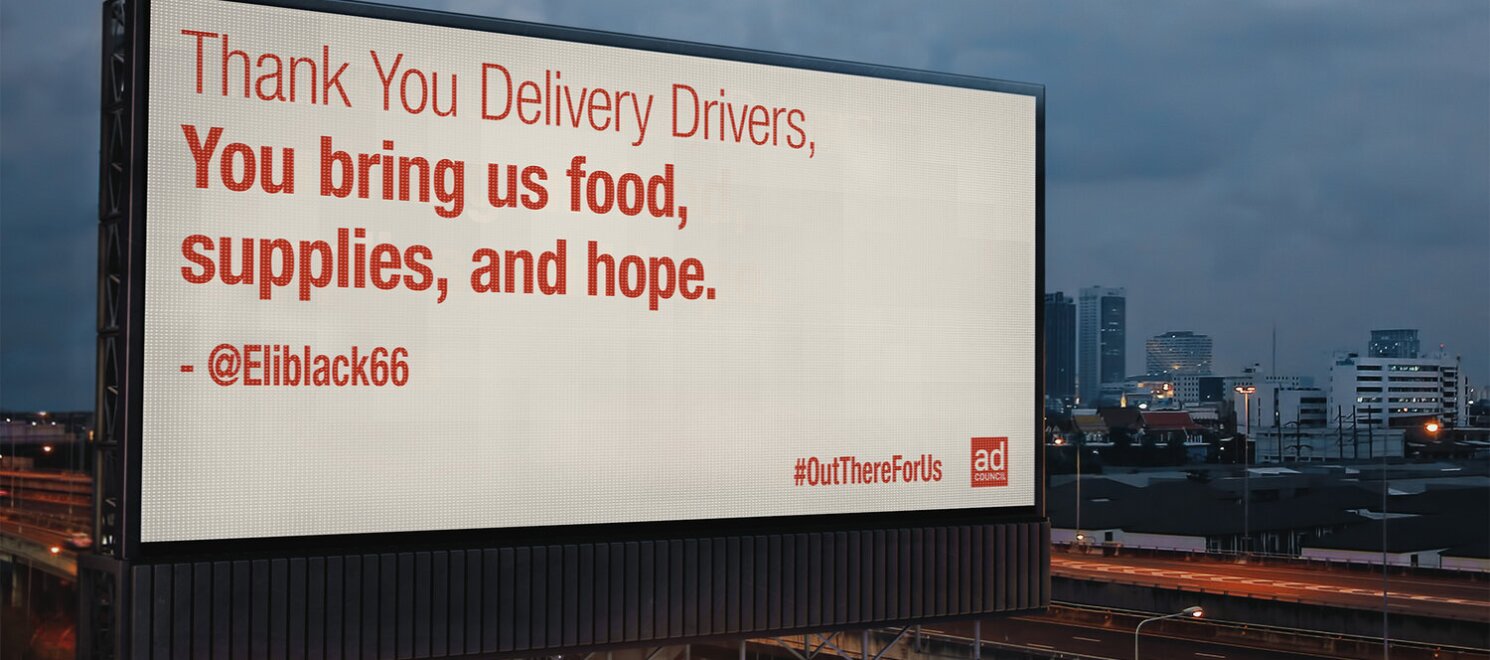
In March of 2020, in partnership with the White House, CDC, HHS, and major media companies, the Ad Council launches its industry-leading response to the COVID-19 pandemic, rapidly and consistently bringing people the information they need to slow the spread of the virus.
At the same time, many existing campaigns including "Love Has No Labels" and "Seize the Awkward" pivot to address rising hate and a growing mental health crisis.
At the same time, many existing campaigns including "Love Has No Labels" and "Seize the Awkward" pivot to address rising hate and a growing mental health crisis.
2021
It's Up To You
In the largest and most urgent communications effort in American history, the Ad Council, COVID Collaborative and more than 300 cross-sector partners launch the COVID-19 Vaccine Education Initiative.
The unprecedented initiative includes multiple campaigns designed to reach various hesitant communities, and features Dr. Anthony Fauci, four American presidents, thirteen sports leagues, and 1,250 influencers — as well as vast networks of local health experts, pharmacists, faith-based groups and many, many more.
The unprecedented initiative includes multiple campaigns designed to reach various hesitant communities, and features Dr. Anthony Fauci, four American presidents, thirteen sports leagues, and 1,250 influencers — as well as vast networks of local health experts, pharmacists, faith-based groups and many, many more.
2022
2022
In partnership with Opportunity@Work and nearly 50 national organizations and companies, we launched our “Tear the Paper Ceiling” campaign to encourage employers and workers to remove the invisible barrier for workers without a bachelor’s degree. The multiyear campaign aims to change the narrative around the value and potential of more than 70 million workers who are STARs (Skilled Through Alternative Routes).
Within three years, the term “paper ceiling” was widely adopted throughout industries, thirty-one states had pledged to remove degree requirements for state employment, and the skills-first hiring movement had inspired over a million commitments to open jobs to STARs. The work continues to this day!
Within three years, the term “paper ceiling” was widely adopted throughout industries, thirty-one states had pledged to remove degree requirements for state employment, and the skills-first hiring movement had inspired over a million commitments to open jobs to STARs. The work continues to this day!
2023
To harness the power of AI, immersive experiences and Web3 for positive change, the Ad Council announced the launch of our Emerging Media & Technology Committee. The committee is comprised of industry leaders at the forefront of media innovation and technology who are dedicated to supporting the Ad Council’s efforts to reach audiences in new and innovative ways.
2024
2024
Our national “Love, Your Mind” campaign on mental health launched its biggest effort yet, in partnership with 11 professional sports leagues and organizations. The series, called “Rituals We Share,” features star athletes sharing their rituals to care for their minds on and off the field — normalizing the conversation and encouraging millions of sports fans across the country to prioritize their own mental health.
(The “Love, Your Mind” campaign has also featured talent like Elmo. Read more on our multi-year Mental Health Initiative, in partnership with the Huntsman Mental Health Foundation, the Arthur M. Blank Family Foundation and others.)
(The “Love, Your Mind” campaign has also featured talent like Elmo. Read more on our multi-year Mental Health Initiative, in partnership with the Huntsman Mental Health Foundation, the Arthur M. Blank Family Foundation and others.)
2025
2025
Guns are the number one killer of children and teens in the U.S. And research shows Americans actually agree on more than they think when it comes to gun violence — we all want to keep our children and loved ones safe. We launched “Agree to Agree,” an expansive new campaign to spur nonpartisan action around gun violence epidemic, by building on that common ground and convening partners across the advertising, business, health care, marketing, media and tech industries.
(Read more on our multi-year Firearm Injury Prevention Initiative.)
(Read more on our multi-year Firearm Injury Prevention Initiative.)
Our Current Work
Learn more about The Ad Council’s current campaigns addressing community and opportunity, early detection and preventive health, gun violence, mental health, and safety.